(Bon dans l'échelle des premiers de cordée du nouvel ordre mondial/great reset, il y a biden, mais il n'osera pas, macron, il va attendre et voir et scholz ou l'autrichien ou encore l'australien tout nouveau arrivé. A mon avis, ils vont attendre pour voir l'évolution de la situation, c'est le principe du laboratoire, un pays applique sur un sujet une politique extrême et si il n'y a pas de révolte populaire, il passe le flambeau aux autres....évidemment dans le champ occidental. Pour l'instant toutes ces histoires LGBT, woke, mesures sanitaires débouchant sur une surveillance totale des citoyens, la pénurie heureuse, la destruction des industries et j'en passe et des meilleurs ne concerne pour le moment que l'occident. Après sans doute l'occident l'imposera au reste des pays réticents par la violence à son habitude. Les droits de l'homme, l'égalité, le droit d'ingérence humanitaire, la démocratie, tous ces discours à servir entre le désert et le fromage ne sont là que pour dissimuler la volonté de domination de l'occident. note de rené)
Trudeau Plans To Slash Canadian Fertilizer Use In Similar Move To Netherlands
Authored by Jarryd Jaeger via The Post Millennial,
Over the past few weeks, farmers across the Netherlands have vehemently turned up in droves to protest the government's plan to reduce nitrous oxide emissions, arguing it would have disastrous consequences for their business, and eventually, consumers.
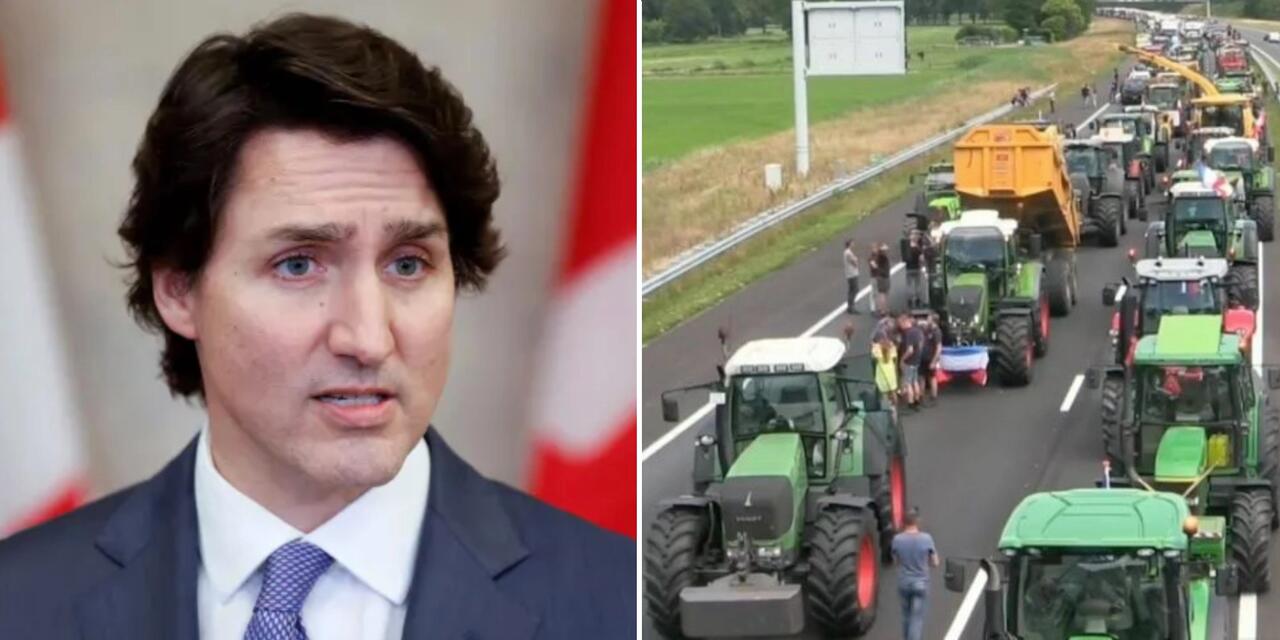
The source of their anger is a policy that is not unlike one which Prime Minister Justin Trudeau is seeking to implement in Canada.
In 2020, the Trudeau Liberals announced that their goal was to reduce emissions from fertilizer, a major producer of nitrous oxide, by 50 percent over the next eight years.
Fertilizer Canada slammed the government's "short-sighted approach," arguing that reducing nitrogen fertilizer use "will have considerable impact on Canadian farmers' incomes and reduce overall Canadian exports and GDP."
In a report compiled by Meyers Norris Penny (MNP), they suggest that regulated fertilizer reduction could cost Canadian farmers $48 billion by 2030 and reduce crop sizes
By this time, "yield gaps for three major crops are estimated at 23.6 bushels per acre per year for canola, 67.9 bushels per acre per year for corn, and 36.1 bushels per acre per year for spring wheat."
As the Toronto Sun reports, fertilizer is typically the most expensive cost for farmers, and they tend to use only as much as is needed.
Under the plan, farmers will likely be forced to move to using costlier "greener" fertilizer, which in turn translates to higher prices for consumers.
Read more here...


Aucun commentaire:
Enregistrer un commentaire