Article trop long, à lire sur le site.
Iran riots and info war: When the ‘dead’ came back to debunk their own death stories
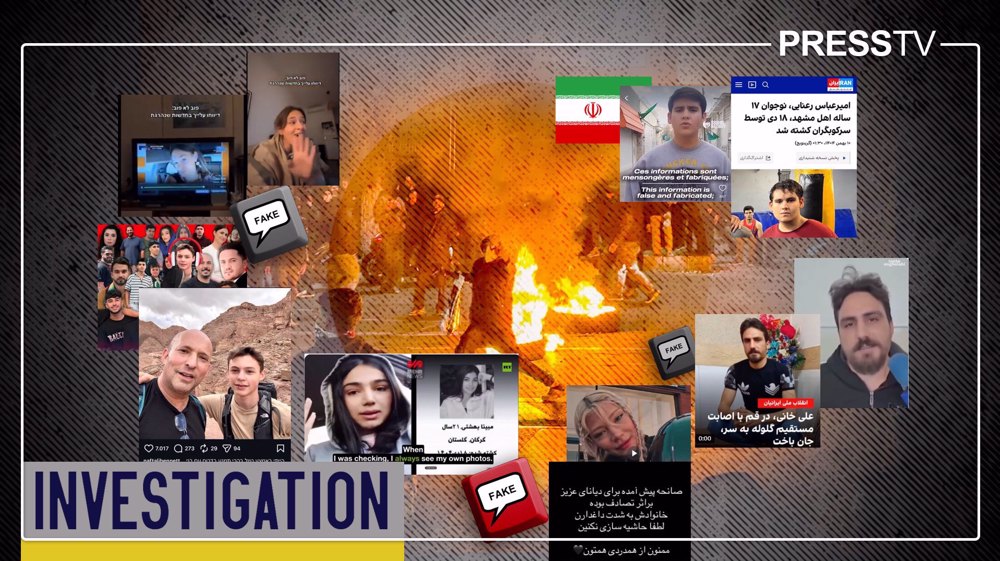
By Yousef Ramazani
Amid the digital fog surrounding the recent foreign-engineered riots in Iran, a troubling pattern emerged: individuals reported “dead” were later found to be very much alive and healthy.
This revealed a systemic failure in verification and pointed to a deliberate campaign of narrative manipulation – an old tactic against the Islamic Republic of Iran.
Coverage of civil unrest often involves conflicting claims, but international reporting on Iran’s recent unrest exposed a persistent anomaly: premature or fabricated death declarations.
Across social media and major Western media outlets, names and faces of Iranian citizens, as well as those outside Iran, circulated widely as martyrs “killed” by Iranian security forces or detainees facing imminent execution.
Yet, case after case, these individuals reappeared – posting videos from home, giving interviews at work, or, in some cases, confirmed by families to have died of unrelated causes.
From Mobina Beheshti to Erfan Soltani, these instances reveal an information ecosystem where claims are amplified without scrutiny, geopolitical narratives override factual accuracy, and the real tragedies of foreign-backed terrorism become entangled with falsehoods – undermining credible journalism and exploiting the emotional weight of victimhood.
Case of Mobina Beheshti
One of the most prominent examples of this phenomenon was the case of Mobina Beheshti.
In early January 2026, her photograph and name began circulating widely on social media platforms like X and Instagram, shared by foreign-linked media accounts and hostile “opposition” pages bankrolled by foreign spy agencies.
She was portrayed as a 21-year-old “protester” killed by Iranian security forces during the unrest – peaceful economic protests that devolved into violent riots and terrorism – her image quickly becoming a symbol of alleged state brutality.
The narrative was simple, emotionally charged, and spread rapidly. It circulated at a dizzying pace across social media networks with gullible users accepting it as a true story.
However, on January 28, 2026, Beheshti herself posted a video online. Appearing healthy and unharmed, she expressed disbelief at reports of her “death” and urged people not to believe the false claims amplified by some foreign media outlets.
Her reappearance was a direct and personal rebuke to the propaganda networks that had circulated her story, exposing how easily unverified images can be weaponized to create a compelling yet entirely fictional casualty.
Cases of Amir Abbas Raynai and Ali Khani
The phenomenon of prematurely declaring casualties also involved Amir Abbas Raynai, a 17-year-old from the city of Mashhad, who was reported by outlets such as “Iran International” to have been killed by Iranian security forces during the “protests.”
This definitive narrative was shattered when Amir Abbas himself publicly reappeared.
In a direct video statement, he said, “I’m very much alive and healthy. Don’t believe in fake news and don’t spread it. My family gets worried.”
His message served as a blunt correction to the international rumor mill, highlighting the personal anguish and disruption these false reports cause families suddenly confronted with news of their child’s alleged murder.
Similarly, Ali Khani was listed among the dead by the same media outlets, only to later confirm he was alive – an occurrence commentators wryly described as the dead “coming back to life one by one.”
These cases reinforced a disturbing pattern in which names were pulled from circulating lists or local contexts and turned into global symbols of martyrdom without even the most basic verification, such as contacting the individual or their family.
Noya Zion: Israeli woman mistaken for an Iranian 'victim'
The disinformation campaign extended beyond Iran’s borders, starkly illustrated by the case of Noya Zion, an Israeli woman whose viral video was trending for several days.
Israeli media outlets, including Channel 12, broadcast reports falsely identifying Zion – sometimes under the name “Sanaz Javaherian” – as a “protester” killed during the unrest.
Her photograph was presented as evidence of Iranian state violence. However, the rebuttal came from Zion herself, who posted a video from her home in the occupied Palestinian territories.
She mocked the Israeli media with a wry smile and informed the world that she was alive, had never been to Iran, and that the claims of her death were completely false.
This episode revealed a cross-border dimension to the disinformation campaign, where individuals with no connection to Iran’s events were digitally conscripted into the narrative, their identities repurposed to serve a geopolitical storyline that relies on constant reinforcement through new, emotionally charged examples.
Misidentifying the former Israeli PM's son
The credulity and absurdity of the narrative machinery reached an almost satirical extreme when an image of the son of former Israeli Prime Minister Naftali Bennett was mistakenly included among photographs of alleged Iranian “protest victims” circulated by some Western and Persian-language media.
The error was so glaring that it sparked ironic online commentary offering “heartfelt condolences” to Bennett for his son’s “tragic loss” in the Iranian unrest.
This was not a simple case of misidentifying a similar-looking Iranian youth but of inserting a publicly recognizable figure from the Zionist entity into the catalogue of supposed Iranian repression.
The incident exposed the mechanical, often automated nature of much content aggregation, where images are sourced from social media without context or verification.
It demonstrated how the rush to accumulate and display evidence of victimhood can override even the most basic geographic and political realities, reducing a serious and tragic subject to a farcical mistake that ultimately undermined the credibility of the wider reporting ecosystem.
Cases of Mohammad Rasoul Bayati and Reza Niknam


Aucun commentaire:
Enregistrer un commentaire