(Ils sont drôles ces américains, protéger l'IA plutôt que les humains. Ah oui, je rappelle que beaucoup de centres de recherches militaires, de centre de données, de laboratoires de guerre bactériologiques, biologiques sont enterrés sous les villes israéliennes sans que les habitants au dessus soient au courant. note de rené)
Drone Strikes On Amazon Data Centers In Middle East Reveal Urgent Need To Defend AI
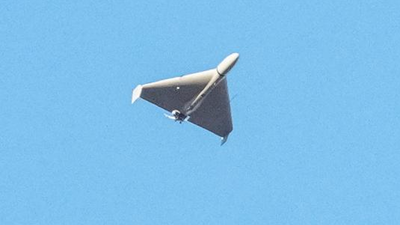
For the first time in modern warfare, Iranian kamikaze drones struck commercial data centers in the Middle East operated by Amazon. This marks a major escalation in the targeting of civilian digital infrastructure.
Amazon wrote on its website that three Middle East data centers were hit by Iranian drones, causing widespread outages at Amazon Web Services facilities tied to the "ongoing conflict in the Middle East."

"These strikes have caused structural damage, disrupted power delivery to our infrastructure, and in some cases required fire suppression activities that resulted in additional water damage," the company said in a post on Monday on AWS's health dashboard.
Operations in the Middle East remain "significantly impaired," AWS said, noting that "customers are experiencing elevated error rates and degraded availability for services."
The entire 'bomb the data center' incident led us to write a note on Monday morning titled, "Modern Warfare Sees First Drone Strike on a Commercial Data Center." This marks a first in a world where Morgan Stanley's Vishwanath Tirupattur recently forecasted that $3 trillion in global data center spending will occur through 2028. Translation: there's a massive security gap in defending data centers from aerial threats.
We first outlined the theme in a late January note titled "Explosion in AI Data Center Buildouts Will Demand Next-Gen Counter-Drone Security."

Our view at the time was:
Wall Street analysts largely end their analysis at the financing and construction of next-generation data centers, with limited discussion regarding the modern security architecture required once these facilities are built and become instant high-value targets for non-state actors or foreign adversaries; traditional perimeter measures such as metal chainlink fencing and standard surveillance systems are rendered useless in the world of emerging AI threats, including coordinated autonomous drone or swarm-based attacks enabled by advances in AI and low-cost unmanned systems.
The key takeaway is that Wall Street analysts and data center developers have just received a major wake-up call: trillions of dollars in planned data center buildouts will require next-generation security, including high-tech counter-drone detection, tracking, and kinetic interception systems. This follows the Ukraine war and other recent modern battlefields, which have sparked the hyper-development of cheap, dual-use, consumer-grade drones that can be mass-produced at a fraction of the cost of traditional air-delivered munitions. We said weeks ago, this proliferation of drones and AI kill chains has given readers a glimpse of the 2030s battlefield.
Our view is that Wall Street will now begin searching for "war unicorns" specializing in counter-threat systems, whether in detection, electronic warfare, or kinetic defenses, as the world appears increasingly unstable and the need to harden critical data center infrastructure against FPV and other drone threats becomes a national security threat.


Aucun commentaire:
Enregistrer un commentaire